
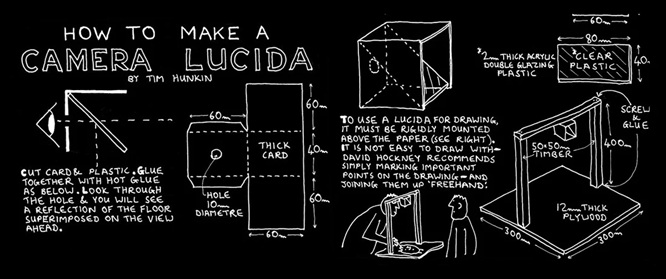
[Tim Hunkin]
Do you want to see something strange? Do you want to see it with a room full of open-minded viewers seeking the unusual, the uncanny, the unexpected?
The Fantasia International Film Festival is a multi-week survey of the weird and wilder corners of cinema from around the world. A frothy brew of Chinese wuxia pictures, African zombie movies, queer detective dramas, European sex romps, American gore comedies, and Canadian Indigenous stop-motion animation. It is a big-tent genre festival that is often jokingly (but not entirely tongue-in-cheekly) called “summer camp for film nerds,” due to the gathering and mingling of international filmmakers, enthusiastic genre fans, and Concordia students looking for a break from the heat in Montreal’s sweltering, humid summer.
The question is not so much “why do you go to the movies,” but rather “how do you go to the movies?” Why might you pick a festival’s one-time only screening over a movie at regular cinemas that screens four times a day for several weeks? And if you do choose a film festival, then what kind of festival? One that showcases world cinema? Independent and local Quebecois filmmakers? Documentaries? Genre cinema? Choice paralysis is real, particularly during the season’s almost limitless cultural events in a city such as Montreal.
These questions go deeper. There are also film festivals inside festivals—fest-ception! There are, in any given year, at least four parallel festivals taking place inside of Fantasia.
One of those, tucked away in its own curious quiet corner, was Camera Lucida. It ran from 2010 to 2023, somewhat under the radar for most, but providing essential viewing for those attuned to its wavelength.
Founder and programmer of Camera Lucida Simon Laperrière, an author and film critic who curated its first seven years, reminisced with me on the programme’s primordial beginnings:
“As for the origin of the section, it started as an idea Mitch Davis and I toyed with after I joined the Fantasia team in 2007. The initial plan was to create a section dedicated to genre films with an authorial approach. I forgot the name we came up with, but it was something like ‘Transfigured Eyes.’ An issue we had was the vast number of films included. There were over twenty. The project needed more time for reflection and was then dropped. In 2009, we again worked on a spotlight, [this time] named ‘Vers les étoiles: Cerebral Science-Fiction Cinema.’ The name was a reference to Dante’s Divine Comedy. The films included were 8th Wonderland [Nicolas Alberny and Jean Mach, 2008], Canary [Alejandro Adams, 2009], The Clone Returns Home [Kanji Nakajima, 2008] and La possibilité d’une île [Michel Houellebecq, 2008]. All of them were met with great success. This was a sign that our audience was open to singular films pushing the boundaries of genre cinema. If Camera Lucida had one predecessor, it was this spotlight.”
During the time leading up to the summer of 2010, Simon personally pushed for a new section inspired by Vers les étoiles. Many genre festivals already had similar edgy and cerebral sidebars at the time: Cannes had Un Certain Regard, TIFF had Vanguard (often called Midnight Madness’s smarter, cooler, elder sister, although it is now also defunct). The idea was not met unanimously. Some programmers were against it, thinking the Festival did not need a separate section, or that Camera Lucida would be too intellectual, too off-putting for a pop festival that once derived its name and origin story from FAN and ASIA during the great Hong Kong action boom of the 1990s. There was also an issue about the number of films—a challenge that would always be present over the 14 years of Camera Lucida’s existence.
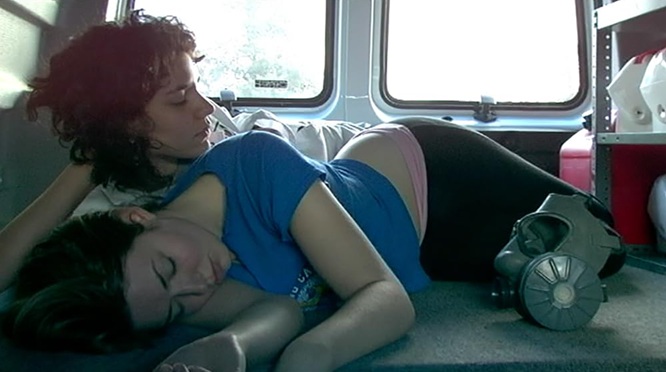
:: Canary(Alejandro Adams, 2009) [Canary production]
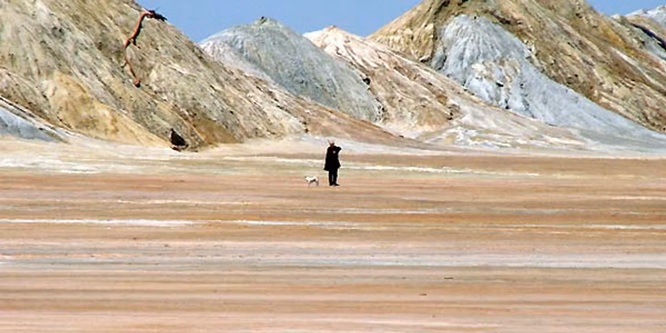
:: La possibilité d'une île(Michel Houellebecq, 2008) [Mandarin Films / Black Forest / et al.]
A few months later, on June 29, 2010, the press release read as follows :
“A new category is being added to the Fantasia Festival programme in Montréal—After DOCUMENTARIES FROM THE EDGE and LE WEEK-END FANTASTIQUE DU COURT MÉTRAGE QUÉBÉCOIS, Fantasia Film Festival opens a new category this year, CAMERA LUCIDA, in reference to Roland Barthes who has always manifested his unabashed passion for popular culture. Rebellious, curious, and innovative, this new section will offer audiences the new directions of today’s genre cinema.”
The programme did, indeed, open with a bang. Quentin Dupieux’s meta horror farce Rubber (2010) was a surreal film that followed a sentient rubber tire as it goes on a killing rampage. The tire, named Robert, was in attendance to introduce the film. The same year, the wry and self-deprecating Malaysian-English (“Manglish”) satirical musical Sell Out! (Yeo Joon Han, 2008) pilloried various institutions and people in that corner of Asia, from CEOs and bureaucrats to artists in arthouse movie circuits. The legendary screening set the entire Hall Theatre loudly singing karaoke midway through the film in spontaneous unison. Simon tells me that Sell Out! was the first film formally chosen for Camera Lucida.
Other titles that year included an adaptation of a novel by Polish sci-fi genius Stanislaw Lem (Solaris) made by a Hungarian production designer named Pater Sparrow. The film was simply called 1 (2009). It was paranoid and cerebral, involving books, authorship, political allegory, and inscrutable imagery. Sparrow would go on to do the lush production design for Peter Strickland’s instant cult classic of lesbian erotica and sexual dominance The Duke of Burgundy (2014) a few years later. Japanese master filmmaker Hirokazu Kore-eda’s magical realist Air Doll (2009) showcased future global star Bae Doo-na, in a quiet drama on loneliness and self-discovery, which rounded out the inaugural year.
Over Simon’s stewardship, the programme grew in stature and infamy among those who wanted the strangest and most challenging titles inside the sprawling Fantasia prospectus. The vast majority of titles would play in the smaller, more intimate J. A. De Sève cinema at Concordia University, with its layout more akin to that of a lecture room (the sound booth is nestled within the rows of seats to the left of the screen and can provide an “overspill seat of one” or an opportunity to charge a dying phone or laptop during a screening). It is no secret that the cooler, weirder, and more challenging films traditionally play in the De Sève. Often, audiences exited the room having experienced a kind of bonding event, a group discovery of something with only a few witnesses, or perhaps some mild trauma from a film that might have gone too far.
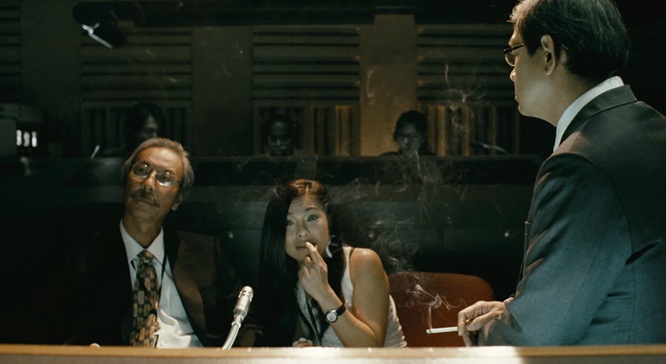
:: Sell Out! (Yeo Joon Han, 2008) [Amok Films]
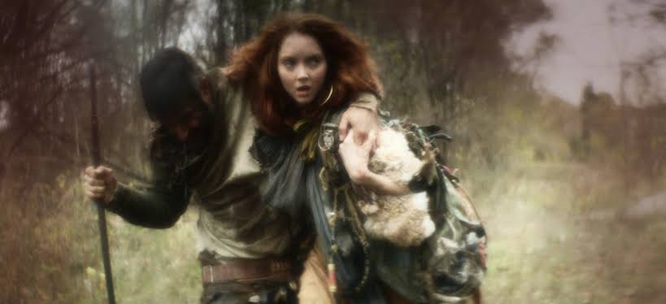
:: Orion (Asiel Norton, 2015) [Traction Media / Zyzak Film Company]
One of the most infamous screenings was a bleak post-apocalyptic survival picture steeped in black metal undertones (despite its nearly silent execution and absence of any thrash riffs) called Orion (Asiel Norton, 2015). Even the hardcore lovers of the difficult and the unusual walked out, commiserating in the foyer at how nearly impossible it was to make it through David Arquette and Lily Cole trudging half-naked and fur-matted through the brackish grey cinematography. Challenge is a risky enterprise, and Camera Lucida was fearless in its ability to surprise, offend, or cause one to reconsider everything.
Other titles of the first half decade ranged from experimental high-profile cult classics Boyhood (Richard Linklater, 2014) and The Wailing (Na Hong-jin, 2016), to the out-of-nowhere Ethiopia-shot sci-fi Crumbs (Miguel Llansó, 2015), which featured a quest through the strangest geography on Earth, the yellow-and-verdurous Danakil Depression. There was guerrilla Canadian filmmaking involving secret trespasses of the 1960s NASA space programme, Operation Avalanche (2016) from Matt Johnson, as well as the precocious and hyper-deviant Mexican wunderkind Emiliano Rocha Minter’s sex horror, We Are the Flesh (2016), which has its courageous young actors building the womb-like set onscreen as the film unfolds.
There was the exceptional run of emotional and folk horror feature debuts The Midnight Swim (Sarah Adina Smith, 2014), Toad Road (Jason Banker, 2012), The Interior (Trevor Juras, 2015), and my personal favourite, the panic attack drama set in Chile Magic, Magic (Sebastián Silva, 2013), where Juno Temple is emotionally assaulted into full hysteria by a vile (but secretly broken) Michael Cera.
Some odder works (and that is saying something) from Sion Sono, Satoshi Miki, Kiyoshi Kurosawa made it into the programme, alongside a curious science-fiction hybrid from Angels & Airwaves and William Eubank, Love (2011), where space station loneliness is juxtaposed with Civil War battles and thoughts of human connection, as well as the dryly funny Borges-inflected bureaucratic mystery You Are Here (2010) (featuring Toronto star Tracy Wright’s final appearance onscreen). Other memorable titles include Filip Tegstedt’s domestic nightmare Marianne (2011) from Sweden, Seth A. Smith’s black and white Nova Scotia creature feature Lowlife (2012), Filipino experimental musical exploitation horror-comedy-drama-gutter-crime-picture Mondomanila (Khavn de La Cruz, 2012), and the extraordinarily difficult to watch anti-bullying animation King of Pigs (2011) from Yeon Sang-ho, long before he made the crowd-pleasing Korean zombie blockbuster Train to Busan (2016).
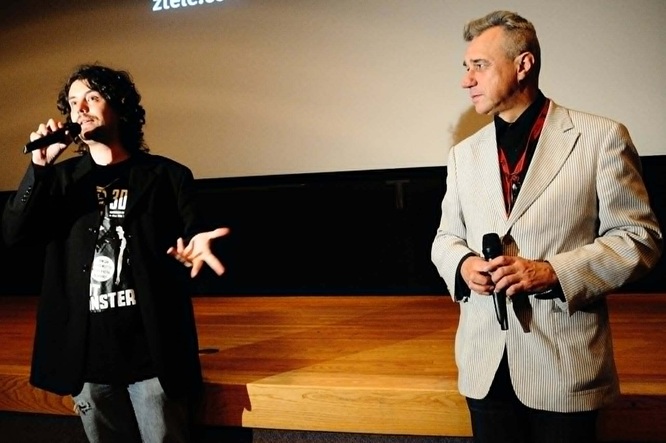
:: Simon Laperrière and French director F.J. Ossang at the North American premiere of La succession Starkov (2011) (photo : © Fantasia)
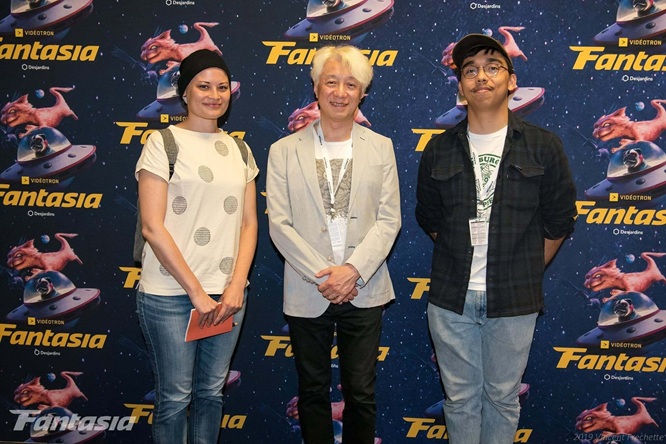
:: (From left to right) Interpreter Ivu Orford, Japanese director Makoto Tezuka, and Ariel Esteban Cayer at the Canadian premiere of the restored Legend of the Stardust Brothers (2019) (photo : © Fantasia)
Film critic, programmer and film distributor Ariel Esteban Cayer would inherit Camera Lucida in 2017, and bring a more understated, less meta-structural tone to the programme, which deepened its scope. I spoke with Ariel recently regarding his tenure, and the eventual post-COVID shuttering of Camera Lucida in 2023:
“Trying to define it for myself, I wanted to keep some of that DNA for the esoteric and experimental, while also steering the section towards a more obviously identifiable definition: an arthouse or auteur-driven sensibility that could run counter to Fantasia’s mainline genre programming (in the mirror way, perhaps that midnight sections exist at generalist festivals), but be differentiable from the rest. We all value genre cinema, but it struck me that it would be useful to position the section as one that would challenge expectations and add variety to the lineup, perhaps find the new filmmakers working between genre and arthouse along the way. Films that other programmers may not be looking at, or not necessarily want to include—voices working in genre cinema, yet not part of the ‘genre scene’—overall, interesting films outside of any categorization. To think of the films as cinema first, rather than as ‘genre’ first. I tried to apply counterprogramming logic to the section. This did put me at odds with other programmers, sometimes, but on the upside, the DNA of this survives today through Justine Smith and the current Underground section, albeit hers is far more dedicated to lower-budget works.”
Cayer’s stewardship would continue to focus on the folk-horror elements of Camera Lucida with Rainer Sarnet’s beautiful and strange November (2017), Dwein Ruedas Baltazar’s haunting Ode to Nothing (2018) and Karen Skloss’s The Honor Farm (2017). Also sprinkled in were a few curated documentaries, examples of which were the Shiretoko Peninsula-set Shari (Nao Yoshigai, 2021), a place on Hokkaido Island where human and animals co-exist, as well as the “edited entirely in bed” paranoid film essay-cum-take-down of Ring doorbell cameras Home Invasion (Graeme Arnfield, 2023), which was also a century-long tour of domestic-siege-cinema and home security innovation. On the other end of the filmic spectrum is Jeon Go-woon’s Microhabitat (2017), an intimate and gentle “couchsurfing drama” that reflects on the nostalgia of youth that seems to slip away so quickly, unnoticed until it is nearly forgotten. It is a quiet masterpiece—one nearly forgotten itself.
Further highlights included cult auteur Nobuhiko Obayashi’s late-period work Hanagatami (2017), which screened alongside the American indie “dudes-hanging-out” drama Relaxer (2018) by Joel Potrykus. Jane Schoenbrun’s debut breakout We’re All Going to the World’s Fair (2021) and Tilman Singer’s graduate thesis and exorcism anti-romance Luz (2018) played to the same lucky few in the J. A. De Sève theatre, before their respective Neon and A24 breakouts.
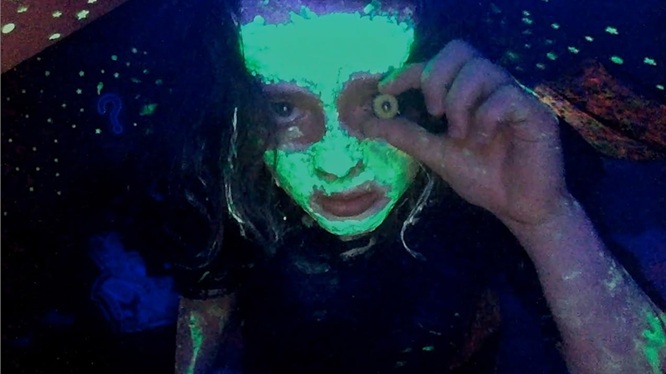
:: We’re All Going To the World’s Fair(Jane Schoenbrun, 2021) [Dweck Productions / Flies Collective]
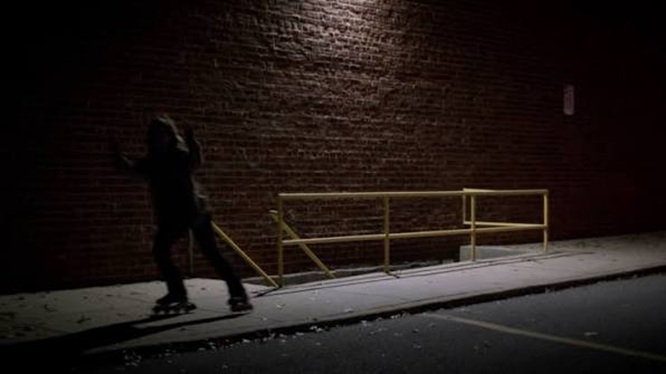
:: Happer’s Comet(Tyler Taormina, 2022) [Omnes Films / Salem Street Entertainment]
Ariel also showcased the early works of Omnes Films in Camera Lucida (Happer’s Comet by Tyler Taormina [2022], Topology of Sirens by Jonathan Davies [2021]), before the collective would go on to become a cult darling with the recently lauded successes of Carson Lund’s Eephus (2024) and Taormina’s Christmas Eve in Miller’s Point (2024). Smaller titles were balanced with challenging, but still high-profile programming choices, such as David Robert Mitchell’s sprawling surrealist neo-noir Under the Silver Lake (2018), made with a sizable budget after the success of It Follows (2014), and David Lowery’s intimate time-spanning meditation A Ghost Story (2017).
The understated sorcery of Camera Lucida was its forward-thinking programming, which may have gone somewhat unnoticed in its moment. However, with a bit of time and distance, as filmmakers’ careers and reputations grew, it now looks prophetic in the rear-view mirror. Ariel knows the section found its dedicated audience, with many people telling him privately that it helped them guide their choices every year.
Throughout my two and a half decades long attendance at Fantasia, for the entire run of the programme, it was the section I would peruse first. I became good friends with both Simon and Ariel through constantly seeking interviews from the many filmmakers who got their first shot at having their films shown in front of a “regular audience.” In the end, Camera Lucida was a festival inside a festival for filmgoers who do not necessarily distinguish between high and low, genre or arthouse, experimental or commercial. The kind of audience who is ready to approach every film with an open mind.
So, why do you go to the movies, and why choose to see them at Fantasia? For a tiny, but pivotal few, for a small, but significant time, it was simply for Camera Lucida.
*
Materials scientist by trade, Kurt Halfyard is also an avid film fan, director of photography, actor and critic. Since 2005, he is known as a collaborator for the Screen Anarchy website.
 |
envoyer par courriel | 
| imprimer | Tweet |




Site créé sur mesure pour Panorama-Cinéma par  .
.