
1 | 2
|
TRIGGER WARNING : This interview contains several mentions of filmmaker Claude Jutra, who has been posthumously targeted by numerous allegations of child sexual criminality following testimonies made public since 2016. We kept intact the segment where Keith talks about him because, at that specific moment in his career, Claude Jutra was a source of inspiration and played a pivotal role in his filmmaking journey. |
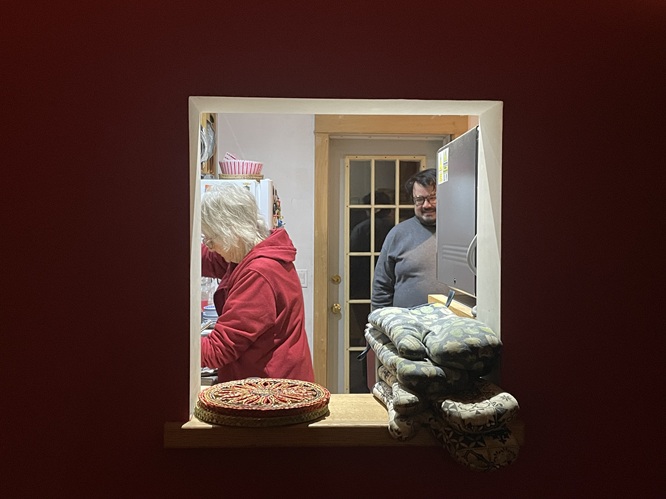
:: Leslie Padorr and Mathieu Li-Goyette, at Padorr and Keith Lock's home (Photo: © Audrey Jiang)
Maybe magic ought to happen in the kitchen.
We interviewed Keith on a chilly, rainy day. Soaked, we arrived at Keith’s house in Toronto’s East York. He and his partner Leslie were waiting for us. Upon arrival, we noticed that the wall connecting the living room and the kitchen space is painted cinnabar red, there is a square opening where you can look into what is happening in the kitchen. Somehow, the wall was metaphorical of our feelings for this visit; we felt we were peeping into Keith’s life through this interview.
Later, Keith told us Leslie and he used to host film screenings at home using this opening. The projector would be in the kitchen, and the screen would be in the living room, light piercing through the space.
We arrived at the round table in the kitchen, Leslie and Keith asked us which type of tea we would like. After smelling three different kinds, Audrey excitedly decided for everyone that we would have the expensive oolong tea. Meanwhile, Mathieu was chatting with Leslie about the quality of her Mandarin and how he feels ashamed of not speaking it.
As the tea brewed, the sound of rain waded down, and Leslie made her way upstairs, so began our 2-hour-long conversation with Keith about his first camera and life making images from the heart.
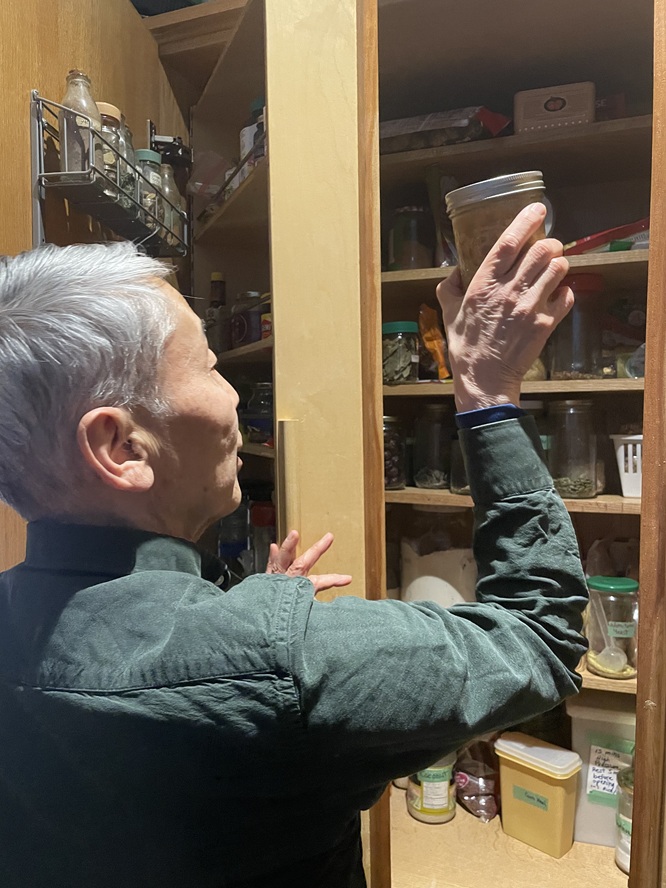
:: Keith grabbing seasonings for the noodles we're going to share (Photo: © Audrey Jiang)
Audrey Jiang: In an interview you did with Mike Hoolboom, you said that your father gave you your first camera.
Keith Lock: A Brownie Starflash?
AJ: Yes. What aspect of it made you want to create more images?
KL: I think my father always wanted to do photography. He wanted to be creative. He did fashion design at one point. He used to sell drawings. He would go to New York City and photograph people on the street. And then do fashion drawings. There was a fashion house that he would sell to. And if they bought one of his drawings, they would pay him a dollar.
Anyway, my family had a laundry, a Chinese laundry with my grandma. So one day, my father bought a photographic enlarger and brought it home. And he got yelled at very severely because my grandmother thought it was a complete waste of money. It would have been pretty expensive for them. So he never used it. He put it aside, and then he set it up in the basement of his store in Chinatown. So when I was maybe 11 he showed me how to use it.
He had given me a camera — I've got a picture, I'll show it to you.
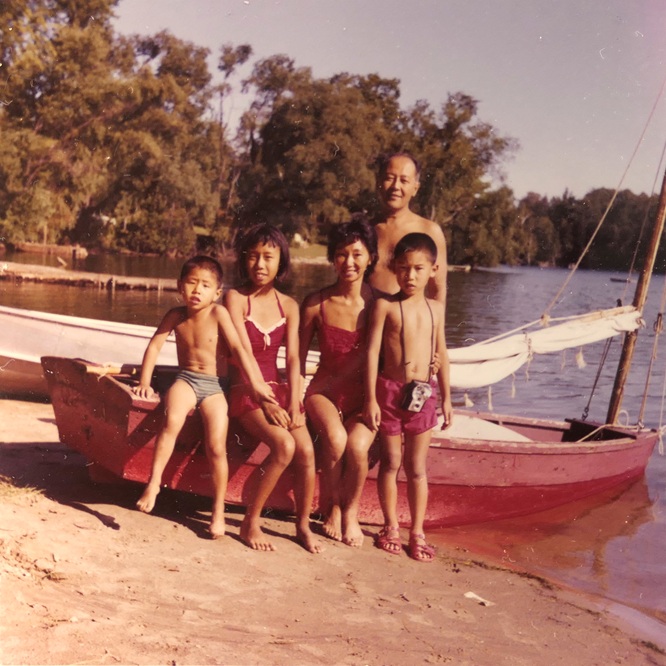
:: “My brother, my sister, my mother, my father, and me.” (Photo: © coll. Keith Lock)
I don't know how old I am here. Ten or something. After school, I had to work in the drugstore. He set up the darkroom in the basement and showed me how to use the enlarger. So sometimes when I was at the store, if it wasn't busy, I'd just go down and develop pictures. And it was really, really amazing.
I really loved doing that. And then in high school, in grade 11, I met Jim Anderson. He had just moved to Toronto from Peterborough, and his locker was right next to mine. We used to race to see who could open their locker first. We had those combination locks… And I always won. But maybe he let me win. I don't know. Jim was really interested in the National Film Board. So I got interested in film. And then we made our first films together in high school.
Mathieu Li-Goyette: So that would be Flights of Frenzy [1969].
KL: Just before we did a geography project together. That was our first film. It was called In the Beginning. It was about the beginning of the Earth. I'd really like to transfer it, but I can't. For some reason, I can't find the quarter-inch tape, the audio track. But anyway, we did Flights of Frenzy, and that won a huge UNESCO award in Amsterdam. In those days, Canadian film was just starting out, so it was in all the newspapers, and I got on TV and things like that. We broke into the world of filmmaking.
MLG: When you shoot Flights of Frenzy, what fascinates you about war? There's the Vietnam War going on, but is it a part of your life? Is it already part of your family history?
KL: It was always in the background. My generation, our parents, that was part of their life. During my time, it was more the anti-war that was influential for me. Really, a lot of people came up from the States to Canada during the Vietnam War, and they brought up a lot of energy and just a lot of stuff that we had no idea about, like the Co-op. They started the Toronto Filmmakers Co-op. I was at the first meeting, and they made me the first chair because they were so anarchistic. They had to have a chair and a board. Then they said, “Keith is Chinese, and Chairman Mao is Chinese, so it'll be Chairman Keith.” [Laughs]
Anyway, for Flights of Frenzy, cameras didn't have macro lenses at the time, so I taped a magnifying glass over the lens, which gave it that look. Nowadays, there's a way to fake that you're filming a miniature if you do it with a very short focus lens. This was kind of like a precursor.
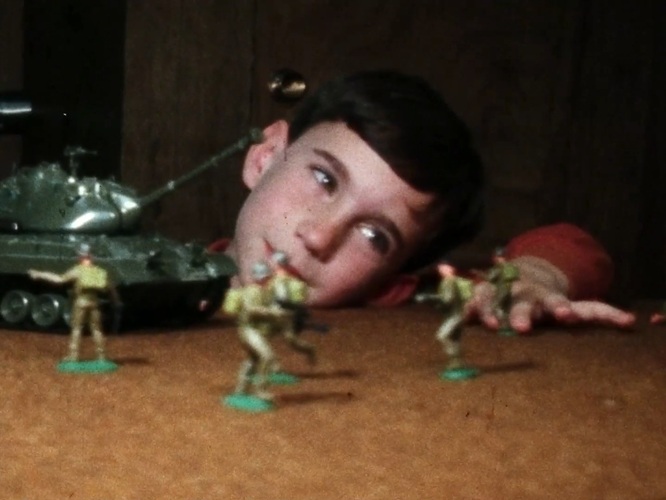
:: Flights of Frenzy (1969) [Keith Lock / Jim Anderson]
MLG: You said you were in the news… Is it at that point that you realized maybe there's a career to be had in filmmaking?
KL: Absolutely. We started that film during the last year of high school and finished it that summer. Then it was the first year that York University offered a film course, the first film course in Canada. My dad wasn't happy about that, because I'd been accepted into engineering at Waterloo, so he wasn't happy about it.
One time, I was talking to Joyce Wieland, and I told her about this. She said that when I’d get my picture in a national magazine, they'd back off. They'd stop that. Then I had a feature film at TIFF. They went to see it and didn't realize before how big a deal it was. They never mentioned it after that.
MLG: At the same time, he encouraged you, your father. He plays a big part in your films.
KL: Yeah, it's funny, because he encouraged me, and he was in the films… I think he encouraged me unconsciously or something.
AJ: I also felt enchanted by him as an actor, also by the fact that he had his drugstore in Old Chinatown at that time. I guess almost two-thirds of it was demolished to make way for the current city hall.
KL: Indeed. In the residential part of Chinatown, they just built city hall on top of it and kicked everyone out. They didn't give them fair market value or anything. The Chinese just did what they were told because they were just trying to survive back then. It was just so difficult. Then, in 1969, the city wanted to bulldoze the commercial part of Chinatown on the south side to make a parking lot for the Eaton Center. The developers said, “It is a ghetto and an eyesore.”
This time, the community got together, and they said, “We'll go to city hall.” They made these posters, and every business in Chinatown had them in the window. It said, “Help save Chinatown, go to the City Hall.” It had the Chinese character 存 (cún), meaning “to preserve”. I have it, I can show it to you.
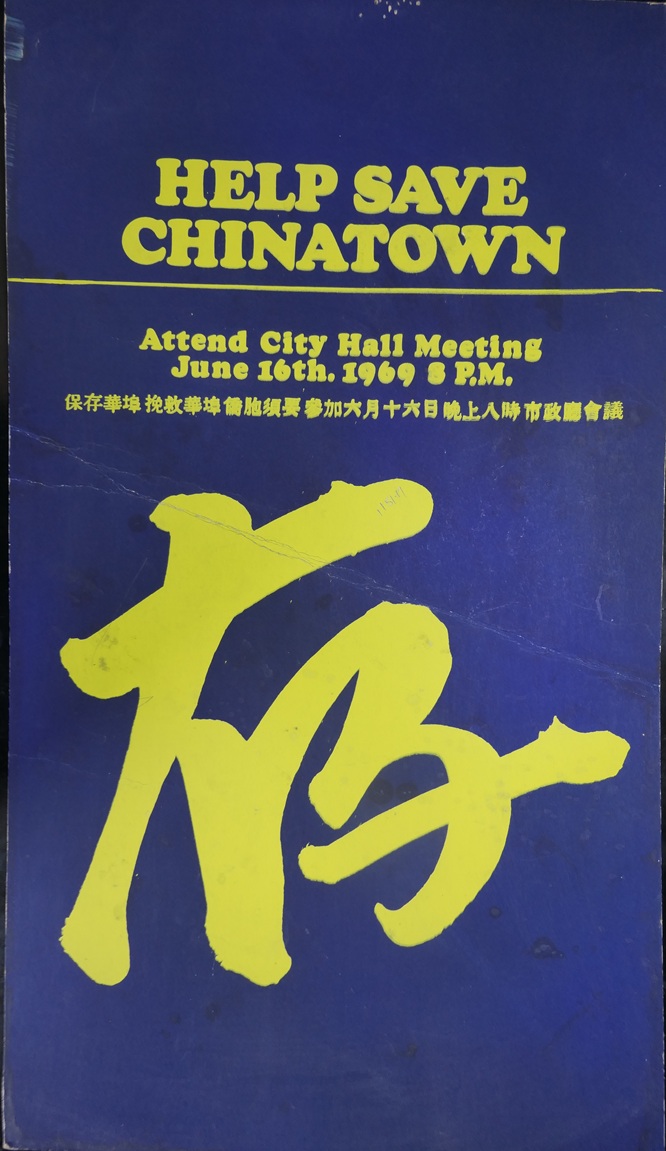
:: “It had the Chinese character 存 (cún) for preserve.” (© coll. Keith Lock)
KL: So, this is something that all these archivists are trying to get their hands on. But I kept it. I thought it was cool.
AJ: It is really cool.
KL: Every store window had one. You can see the meeting day. And the whole Chinese community went to the city hall. They talked about the contributions of the Chinese community and other things. City hall backed off. This is the only one that's left. It's been used. It's shown up in a lot of things. I want to give it to an archive somewhere. Yeah. I just want to find a good one. So that was Chinatown at that time.
In those days, there were also a lot of bachelors and bachelor societies. Sometimes we'd open the store in the morning, and there'd be an old guy sleeping in the doorway. Like they had no family or anything. So, after work, my dad worked with some other people and they started the Mon Sheong, Home for the Aged. It's the first sort of old age home for Chinese people. It had Chinese food and everything. So, he would work at the store and then after working at the store, he would work on the Mon Sheong. So, all the kids, we had to go to the store after school and work there. Otherwise, we'd never see our dad.
I was in the store from age 7 until university. And I got to see a lot of things about Chinatown that people don't know about, because my dad was a pharmacist. In fact, at the time, they didn't accept Chinese students at the University of Toronto Pharmacy School. But because he was a war veteran, they couldn't say no and so, he became the first Chinese pharmacist east of the Rockies. I think there was one in Vancouver. And so, he opened a store in Chinatown to serve the community. People would come into the store. And they'd have a government form they had to fill out or something, and he'd help them. He was doing all that stuff.
AJ: Part of the reason I was asking about the drugstore was also thinking about your film being an archive of that site and also a part of Chinatown, which we don’t find much documentation of. Even for Karen Cho, findingarchival footage of Montreal’s Chinatown at the timewas difficult. And she eventually found one in a music video for the song "Chinatown Blues," sung by Québec singer Luc De Larochellière. It is a very beautiful capture of Montreal's Chinatown in the 80s. So, there's something really special about having your narrative of it, your scope lens on it, at a time when you were a teenager, only beginning to make films.
KL: Like Arnold [1971] and Work Bike and Eat [1972], which are shot partly in my dad's store. It was a safe place. And it was also real. A lot of the other students, when they made their student films, shot them on campus or something, and it just didn't feel real. But shooting at my dad's store was like… it was the world. And Joyce Wieland told me that, before I knew her, she used to hang around my dad's store just watching everyone. Because there's so much going on in Chinatown. Like, there's the gay scene and the lesbian scene too.
The lesbian scene was on one corner, and the gay scene was on the other. It's that little short block. And there are a lot of sex workers because of the bachelors and a lot of tourists. It was just a lot going on.
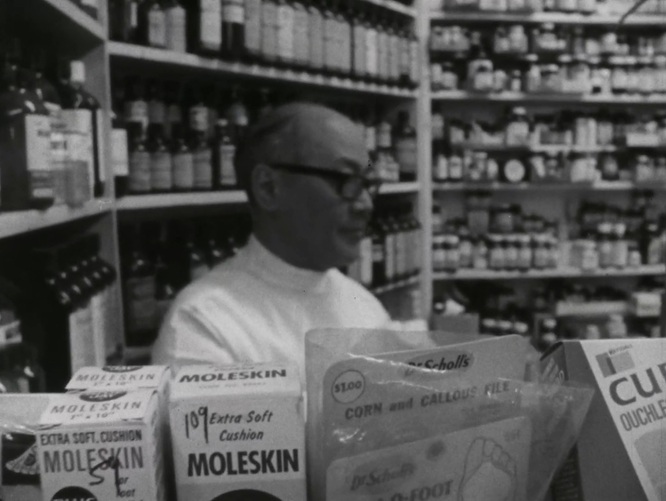
:: Arnold (1971) [Keith Lock / Jim Anderson]
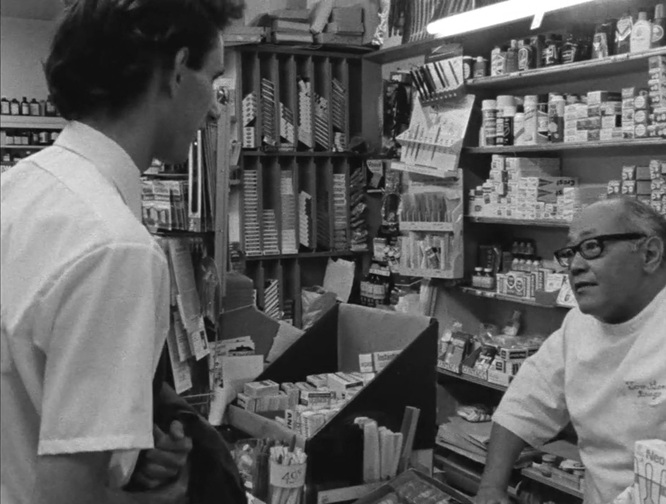
:: Work Bike and Eat (1972) [Keith Lock / Jim Anderson]
MLG: I imagine that shooting your first couple of films in your dad's store must have been pretty useful. When you are young, having access to a location is another kind of challenge. It must have been easier also to think about framing, mise-en-scène, in a space you knew by heart. While sitting in your dad's store and looking at the community, seeing the community coming together to save Chinatown, observing the neighbouring queer communities, it’s like you had a periscope vision. Even in your more experimental work, you are always dedicated to filming communities.
KL: Yeah, that's true. I always try to film from the heart. It's funny because when I was growing up, I spent some time running away from Chinatown. Chinatown wasn't something that people… it was low in people's minds. I didn't necessarily want to be associated.
In the 70s, I worked in the film business. And I worked as Claude Jutras' assistant on his first English-language film, Surfacing [1981]. And I was the only Chinese person, the only non-White. In those days, the drivers were in the Teamsters union. And the Teamsters were like a semi-criminal organization. So, the Teamster, the driver captain, wouldn't take instructions from me. That was my job. I was the 3rd AD, and I'd have to tell him things. But he wouldn't take instructions. I had to tell another guy, and he would tell him. And this guy, he would rant at me and yell at me on set. And say the most horrible things, like: “I'll make your nose flatter than it already is.” All the people on set laughed. Like, it was a huge joke to see the Teamster yelling at this Chinese guy. They just thought it was funny.
MLG: Nobody took your side?
KL: No. One guy, one of the stunt people, took my side and started speaking out on my behalf. The producer went over, took him aside, and told him not to say anything because it would make the Teamsters mad.
It was so stressful because I loved Jutra’s films. He was one of my idols, and I wanted to work with him. On the first day of shooting, he chose my boat to direct from —all the people had to drive out on boats to follow the scene, and because I lived at Buck Lake before this, I knew a lot about boats and canoes since I used them every day. Sometimes, he'd be doing stuff, they'd be rehearsing, and he would shoot something, and then he'd step away. I would just walk up to where he was standing and stand there to get a feel for what it's like to direct, to be a director. On the first day, Jutra asked me about my ambition. Richard Leiterman was the DOP, and I was looking at Leiterman, because I had been doing a lot of cinematography... but since Jutra asked, I said I wanted to be a director. So he gave me his script and told me to hold it and stand beside him: “When I ask for my script, you give me my script.” I got to stand beside him.
[A splash startles us.]
Sorry, that's the turtle.
So, I got to stand beside Jutra while he directed, and, you know, it was just wonderful. On the other hand, I was so stressed.
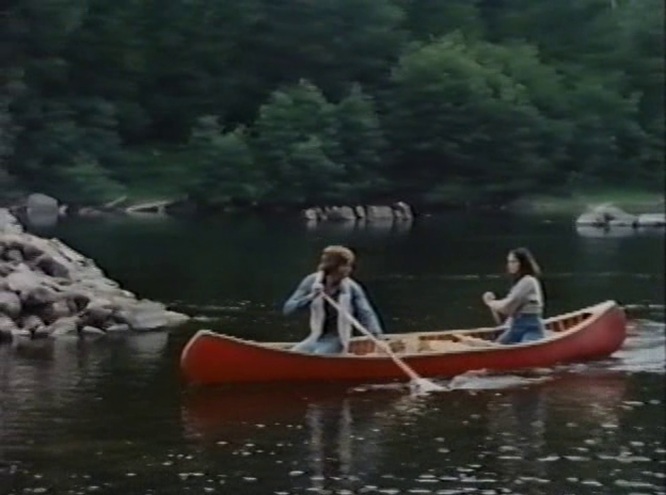
:: Surfacing (Claude Jutra, 1981) [Surfacing film Productions / Famous Players / Fox Productions]
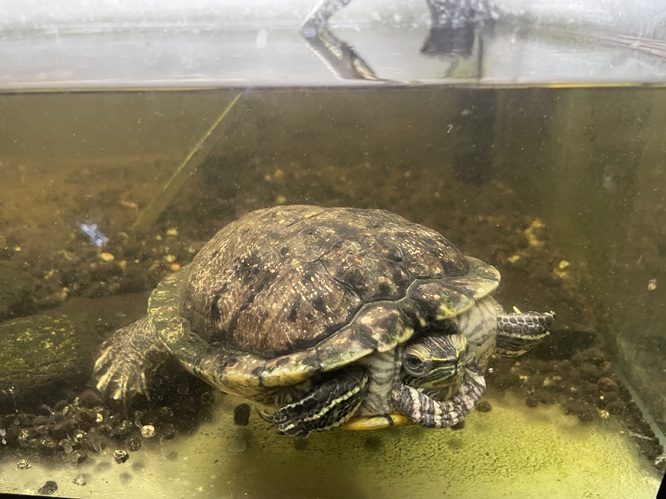
:: Speedy, the splashing turtle (Photo: © Audrey Jiang)
MLG: Was this your first time on a big set?
KL: No, no, but it was my first time working with a director I really admired and who really was an artist, not just a guy doing something. This is a long story, but I was on set, and somebody said, “Oh, Keith, there's somebody calling you.” I went over, still stressed, to see what he was looking at. I look across the river, and there's Jim Anderson, my best friend from school, and the guy with whom I started doing films.
He was working then as a camp counsellor, had these kids in canoes, and was leading them down the river. Then he saw the film being shot, then saw me, and pulled the kids over. I had to signal him to get out of frame, and he understood, and he went off. But, you know, when you're under stress, things become symbolic. I really wanted to go and talk to him, but I couldn't because he was on the other side, he was on the far shore of the river.
So whenever I pictured Jim in my mind, and also the group of filmmakers who were at The Funnel, I felt that they were in a different world, on the other side of the river and could not have experienced and would not understand the things that had been happening to me because I was Chinese Canadian, while they were not. I felt there was a river between us and I was stuck on my side while they were on the other shore. That's why I started to focus on community things. Jim's living in Paris now. I told him this story for the first time, almost two years ago now, and he started crying because he remembered seeing me going down the river. That's why I never joined The Funnel. I was one of the founders of The Funnel, but I never actually became a member.
AJ: What was The Funnel?
KL: The Funnel was an underground alternative film co-op that involved many people from Buck Lake. They showed experimental films and so David Anderson (Jim's brother) and I started showing these films regularly, every two weeks. We had a lot of young people from film schools, and they asked if they could take it over to CEAC [Center for Experimental Art and Communication], which was a block away. We said, “Sure.” It was a lot of work. We had to clear everything out, set up the screen, and program it. I still have all the posters from our group. That became The Funnel.
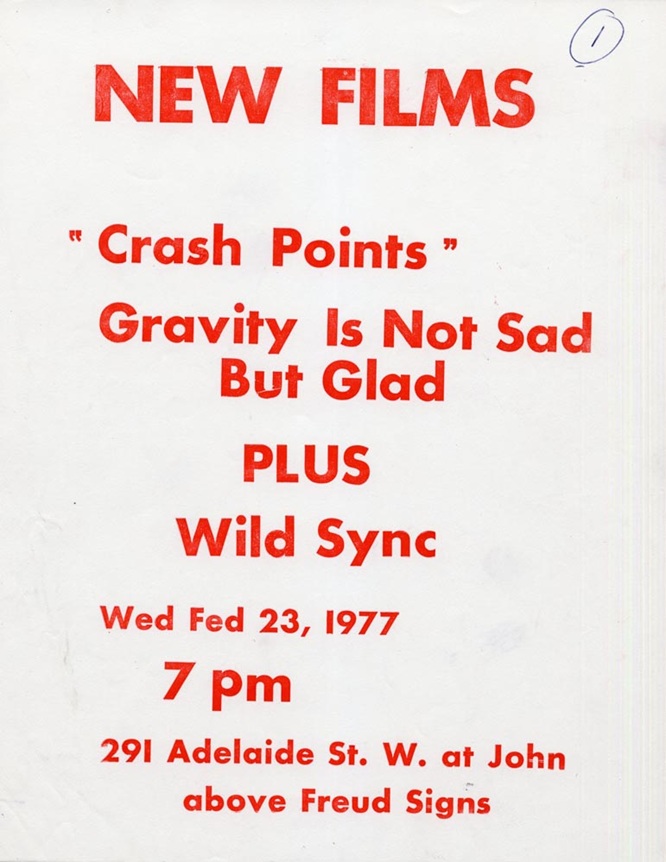
:: “That became The Funnel.” (© coll. Keith Lock)
At that time, the Ontario Censor Board had to screen every film that was shown publicly. They had to screen it and then rate it. They censored it. Of course, The Funnel hated this. They were fighting against it. So they got the longest flicker films that were just impossible to watch; we would program them, and then the Censor Board would have to watch them. Eventually, they just said that art films didn’t have to be submitted to the Censor Board. [Laughs]
AJ: Do they still exist now?
KL: No, they closed in 1989.
MLG: Let’s rewind a bit if you don’t mind. So, after Fights of Frenzy, you do a couple of other short features, and then you get to Buck Lake, and everything seems to align at that point.
KL: I'd been working with Jim Anderson. We did Touched [1970] Base Tranquility [1970], Arnold, and then Jim told me he didn’t want to work with me anymore, and he wanted to do visual art. We remained friends and even bought a Bolex camera together. I took the camera to Buck Lake and shot Everything Everywhere Again Alive [1975] with it. Jim rarely used it. I was living in a co-op house with some people, and then I went up to Buck Lake. It just changed my life. Just living in nature, getting away from the city, that was part of pop culture at the time, you know, hitchhiking. Marshall McLuhan said that “the new generation must live mythically and in depth.” That was Buck Lake.
My partner Leslie was at Buck Lake. She's in the film. She's that hippie girl. [Laughs]
MLG: Did you consider yourself a hippie?
KL: We used to talk about it at Buck Lake. Some people would come up, and we would call them weekend hippies… When Michael Snow saw Everything Everywhere Again Alive, he told me to take it to New York, to Jonas Mekas and the Film-Makers’ Cooperative. I took it there and showed it to them.
It was like 1975 or 1976. The people looked at it, and the programmer said to me, “You seem to be stuck in the 1960s.” Because that was the punk period, they were, you know, punks, and they were trying to distance themselves from the hippies.
Hippies were about love or whatever, and the punks were this other thing, aggressive thing. But now they're really all the same… But, yeah, I guess I was a hippie. I hate to admit it. I had long hair, too.
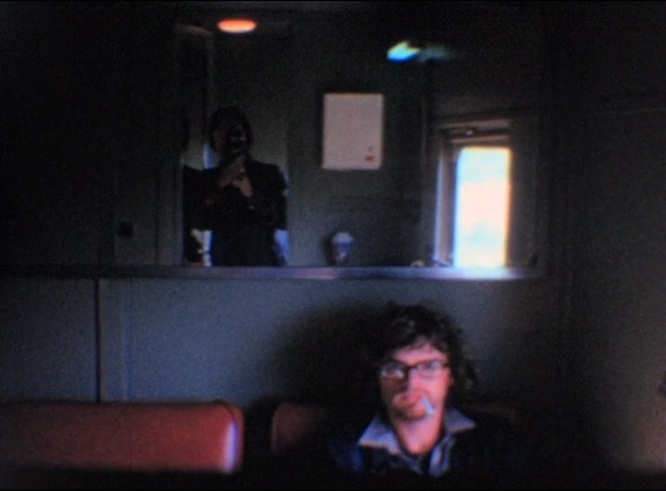
:: Going (1973) [Keith Lock]
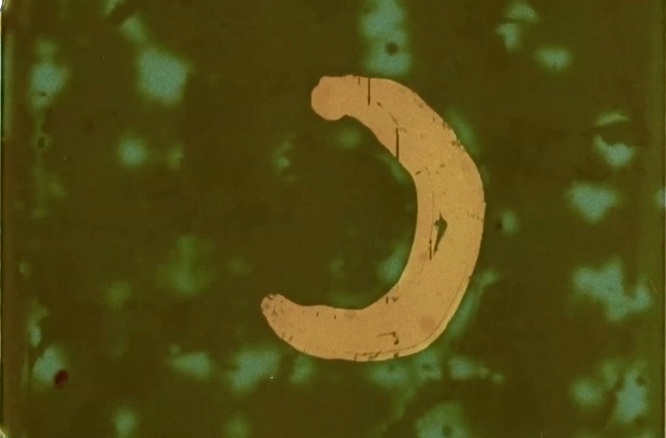
:: Base tranquility (1970) [Keith Lock / Jim Anderson]
 |
envoyer par courriel | 
| imprimer | Tweet |





Site créé sur mesure pour Panorama-Cinéma par  .
.