
1 | 2
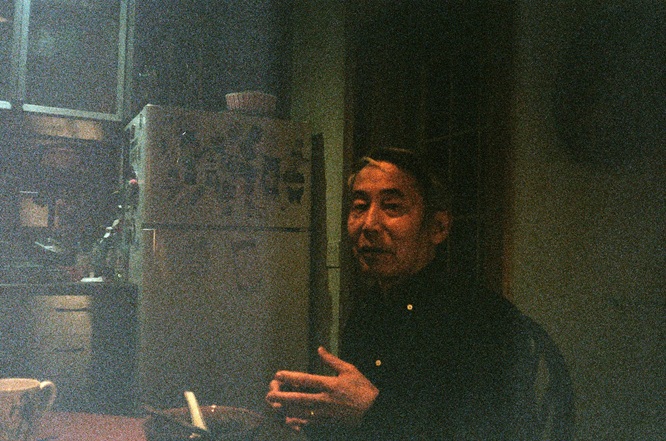
:: Keith Lock in his kitchen late in the evening (Photo : © Audrey Jiang)
MLG: How did you hear about Buck Lake? Do you already go there knowing you’ll film something?
KL: One of the girls who lived in the co-op house that I lived in had met Tom Brouillette, and she had gone up there. They were a couple or something. I don't know what you’d call it. So, she was going back and forth between Buck Lake and Toronto and one day, as she was getting in the car with Tom, I went over and asked if I could go too. I don't know what made me think that, but they said ‘sure,’ and I got in.
I got in the car, went up to Buck Lake, and it was life-changing in a way, living in nature where there were no roads. You had to walk really quite far, like a couple of kilometers, on a trail that you could barely see. There was no electricity either. It made me realize just how much the city puts on you and all the people you need to deal with, and it just fell away, and it was pretty amazing.
It was an adventure. If we drove on this farmer's road, that would take us most of the way to where the house was. But the farmer didn't want us to do that because, if he allowed it, we would have the right of access under the grandfather clause. So we would drive in at night and leave at night. One time, as we were leaving at night with the car's lights off, we drove off the road into the ditch, with one wheel hanging over and spinning. I thought we were screwed. The sun's coming up, the farmer's going to find us. I had just seen that movie, Deliverance [John Boorman, 1972], where city people get shot at by local country people... But Tom said, “Find a lever.”
I looked around, and I found a tree branch, but it was rotten; it was no good. Tom found something like a log, then said, “Find a stone that we can use as a fulcrum.” We found a stone, a flat stone, and then he just put the thing under and lifted it up, lifted the whole car, and then we swung it down, put it back on the road, got in the car, and drove away. And, you know, that kind of application of very practical mechanics, I'd never encountered that before, and it's just the kind of knowledge that is empowering. That totally amazed me.
That was Buck Lake, you know, building the barn and all that is in the film. There was an American movie about these hippies living in a commune that I saw when I was a teenager, and I thought I wanted to do that. So I went up with the Bolex, but I had a different perspective on it… I was very interested in the idea of the “caméra-stylo”, the French New Wave concept that the camera is like a pen with which you express emotion. André Bazin, with his book What is Cinema, too. He was my hero. I used to carry his book in my backpack all the time.
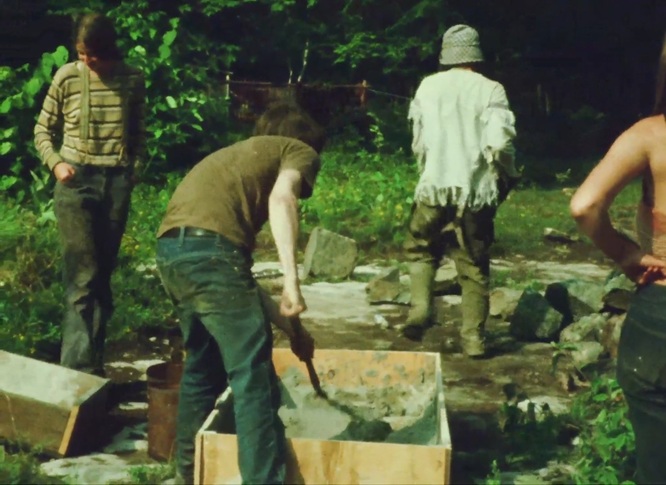
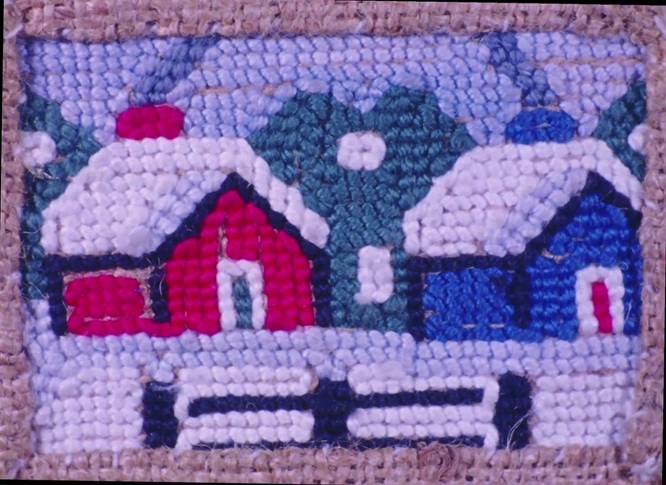
:: Everything Everywhere Again Alive (1975) [Keith Lock]
I was also interested in the Chinese theory of painting, where the emotion goes into the brush, and you read that. I learned about it in a book in English. The Way of Chinese Painting by Mai-mai Sze. I had a copy at Buck Lake. That’s the way I approach the camera, by showing my emotion; it’s writing, it's not just showing, the way a documentary does, but it's also engaged in that world. When I finished the film, nobody understood it. I sent it to a film librarian, who was up in that area in Orillia, and she sent me a note back, and it was a big deal in those days, because you had to ship the film. Anyway, the note said, “If you edit it down, it will make a good ten-minute documentary.” People didn't understand it. But a few people did, and they really liked it. Like, the Funnel people, and Mike Hoolboom. Those people really liked it and understood it, but the mainstream didn't. That was hard because I put a lot of work into it.
MLG: It took its time to get recognized.
KL: Yes, but now people appreciate it, over 50 years later. It's sort of funny. It was shown at TIFF, at the festival's 10thanniversary, where I saw Jutra again — his Mon oncle Antoine [1971] was shown, recently voted the #1 film in Canadian history. Since I worked on Surfacing with him, he had made another film called By Design in Vancouver. He cast a Chinese family in that film for no reason, since it was colorblind casting. I said, “Claude, I saw By Design. I really liked it. I liked that you put Chinese characters in.” Jutra took his two fingers, and he touched just above my heart and said, “I did that for you.” He knew how we felt.
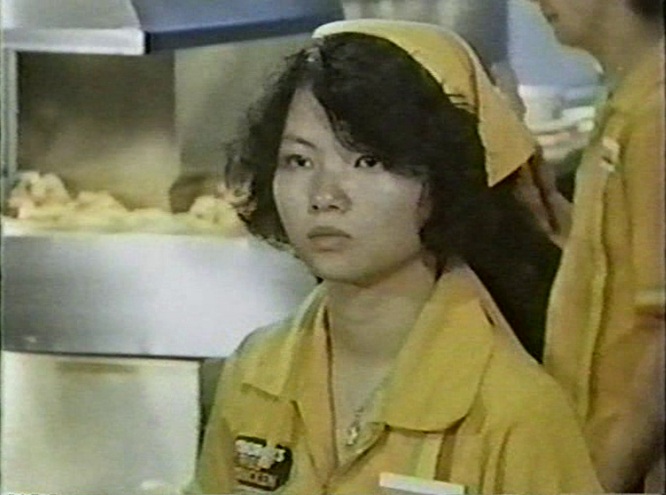
:: By Design (Claude Jutra, 1982) [B.D.F. Productions / Fox Productions / Seven Arts]
MLG: In those years, you played a lot with animation techniques. You scratched film, you painted on film. Did this come from a particular fascination with animation?
KL: It was through the NFB, seeing the films of Norman McLaren. That was a big influence. As were the films of Arthur Lipsett. They were just amazing.
The summer I was working on Surfacing, I got one too many bad interactions with that Teamster driver, who drove to a really remote place and threatened my life. I was so stressed that I didn’t know if I could keep working in film. Then I saw that York University was offering a master’s degree in film, so I went back to school to take it. I thought that education was the answer. There, a teacher, Jim Beveridge, had been the head of the English-language side of the NFB and took two other people and me after we graduated to Montréal, where we went to the Film Board. He was a good friend of Norman McLaren, so we met him at his studio and watched him work.
He was at the drawing board, drawing on film. And he had these glasses that were like Coke bottles. You know, this guy was my hero for forever. I looked up on the wall beside his drawing board, and he had a chart with Chinese characters and their meanings. I felt like, if it's okay with McLaren, then all those other guys are assholes. If McLaren's okay with Chinese characters, I can still go ahead. I can do this. I didn't know this at the time, but someone recently told me he had lived in China for a time. It was amazing to be in his presence, even though he didn't say much. [Ed. note: McLaren worked with the UNESCO in the 1950s and 1960s on programs to teach film and animation techniques in China and India.]
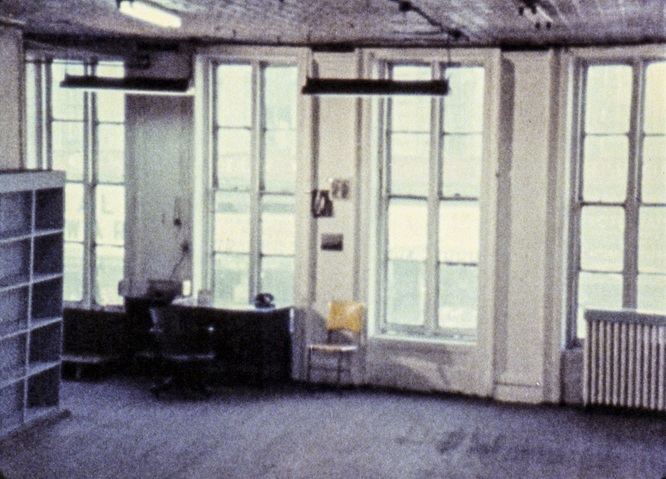
:: Wavelength, 1967) [Michael Snow]
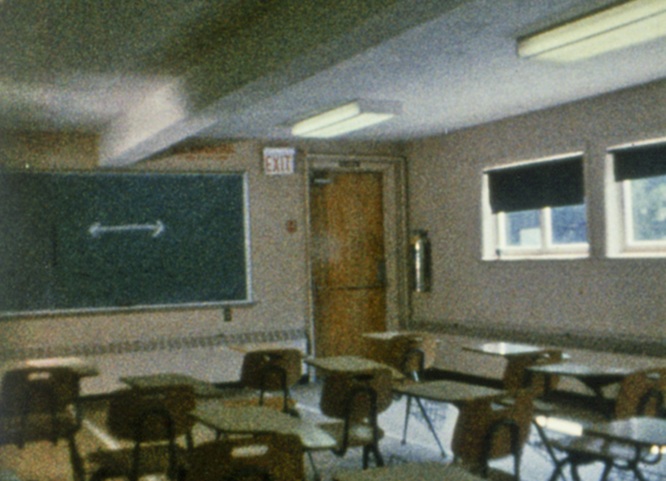
:: <---> (Back and Forth, 1969) [Michael Snow]
MLG: You talked about Jutra, who was one of the most important Francophone filmmakers at that time. But you also worked with Michael Snow, who was one of the most important Anglophone filmmakers at the same time. How did you meet him? How did you encounter his work?
KL: I saw Wavelength [1967] first, before I even knew him. I saw it at the Canadian Filmmakers Distribution Centre (CFDC, it later became CFMDC). They just projected it on the wall, and I watched it. It was just amazing. Then I saw Back and Forth [1969]. When I was a student at York in 1969-1970 , a professor showed us Wavelength and introduced it by saying he had to because it was on the syllabus. [Laughs]
All the students were booing, hissing, and throwing crumpled paper at the screen and paper darts. I'm watching it. I'd seen the film before, but Michael’s vision was just so clear that the hair on the back of my neck was standing up. That was the best way to see Wavelength, with all these assholes yelling. So anyway, I had seen a few of his films, and then he came in. He was at the Filmmakers Distribution Center, whose office was in Rochdale, which was a co-op in the 1970s where people lived and educated themselves. Michael needed background performers for a film he was shooting, just someone to ride on the back of the bus, so he asked me, and I joined. I'm sitting in the bus, and he's working by himself, and he's setting up his camera and the tripod. He was having trouble putting the spreader in place. I got out of my seat, and I helped him put the spreader. After that, he asked me if I'd be his assistant cameraman.
In those days, no one went to film school. It was a trade, working in film. So we were shooting in this hotel, and the cameraman was lecturing Mike. He didn't think this was how you make films. Mike wasn’t buying any of it, so he asked me to see some films that I had shot. I showed him Work Bike and Eat. Then, he asked me to shoot his film. That was Rameau’s Nephew [1974]. I worked with him on a whole bunch of other films. It was amazing. His mind was so clear. I just learned so much, working with him, talking with him.
You remember the Chinatown poster I showed you? When I used to walk from my dad's store, I was heading towards where the Art Gallery of Ontario is now, and there were these postcards that said, “Help Save Chinatown.” They had the names Michael Snow, Greg Curnoe, Jack Chambers, all these Canadian artists. I just thought it was so cool, it meant so much. I was still a teenager; I took it down and put it up on the wall in my parents' house. I've been looking for that one for years.
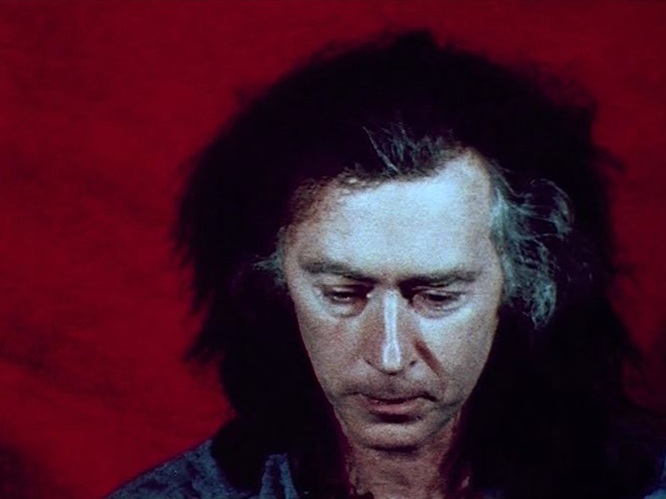
:: Rameau's Nephew (1974) [Michael Snow]
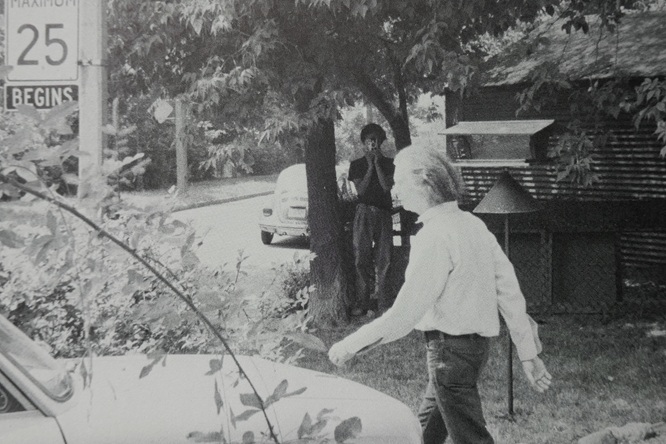
:: Keith films Michael Snow, photograph from Michael Snow: Cover to Cover (© The Press of Nova Scotia College of art and Design / New York University Press, 1975)
MLG: You said you were the only Asian person on the set of Surfacing. More broadly, during your work in the Canadian film industry, did you cross paths at other times with other Chinese Canadians or other people of Asian descent? More than making you feel stressed, did it impact you creatively? Did you eventually feel some kind of responsibility?
KL: The 1970s were the tax shelter era, and some people who were making films had just no idea what they were doing. They were just able to get the money as a tax write-off, and then they'd get rich people to invest. They had no idea what they were doing, but at least I could work there, mostly as a boom operator, doing tai chi when I could during in-between takes because it helped me to keep functioning. On this one film, the filmmaker didn't know anything, and his cinematographer, who had just come from Japan, because Canada was known as a documentary hub, he landed as a camera operator on Hockey Night in Canada… Anyway, his name was Naohiko Kurita, and he was a DOP. We called him ‘Kuri’.
One night, we finished late, around 1 o'clock in the morning, and I was walking. I was dropped off and was walking down Spadina. Some people were coming out of a bar, this white couple, and they were arguing. I'm walking by, and I looked over, and then the guy saw me, and he came over, and he threw a kick at me. I could tell it was karate and that he had a martial arts background. At the time, I had a ponytail. He grabbed me by the ponytail, swung me around, and let go. He then threw a bottle at me, I rolled, and it crashed to the ground. I started trying to talk sense into him. “What are you doing? What are you doing?” I got to my feet, got into a stance, and he did the same. Then these four native indigenous guys came over to help.
The guy stopped, and the girl started to apologize. I was scared, and I just jumped back when she approached. Then she started crying. I thanked the native guys for coming over, and I left.
The day after I walked on set, and in those days, the crew all had to wear white shirts. I'm working there, holding the boom, and somebody said that I had blood on the back of my shirt. I had rolled on the glass, I guess, so I had to explain what happened. The director, a real jerk, said, “Yes, but what did youdo to him?” because he saw me doing tai chi.
Kuri came over and asked whether tai chi was open-handed or closed-handed, and we bonded from there. He was from a samurai family. I really wanted to work with him, so Kuri shot A Brighter Moon [1986]. He was really good; it was great working with him. He had a great neorealist sensibility, in which style didn't intrude on reality. There weren't many people able to do this in Toronto at that time.
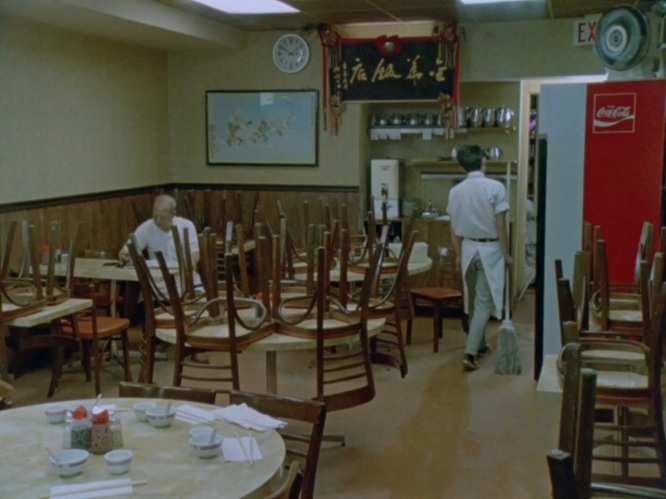
:: A Brighter Moon (1986) [Wondrous Light]
MLG: How long did it take for you to kind of get the feeling that you weren't alone anymore, as a person of Asian descent making films in Canada?
KL: It took many, many years… It's hard to imagine now, but when A Brighter Moon was finished, I had to get it certified as Canadian content. They asked me the names, and I gave them the names of the crew. Then he said, “Well, in this case, none of these people would be Canadian.” I had to give him a lecture about multiculturalism. He said, “Okay, give me their names, starting with their Christian names.” Kuri was a profound Buddhist… [laughs] So, you know, we went along with it because it needed to be certified as Canadian content to be shown on the CBC.
MLG: ABrighter Moonis much more scripted than what you were doing in the 70s, where you were doing avant-garde, improvisational or documentary work, as well as animation, giving the impression that you tried it all. In retrospect, what do you make of it, all this experimentation?
KL: It's hard to explain. I guess it's just working from your heart, you know? I wanted it to be authentic. Work Bike and Eat was all improvised, but it was real. We didn't make up stuff. The scene with the old lady, who's talking about meeting Kaiser Wilhelm, or whatever it was, well, Jim Anderson used to shovel her snow on the driveway. The day we got to her house to film this scene, there was construction on the street, with all this noise from jackhammers. Any other crew probably would have said, “Okay, well, we can't film.” But we didn't know. Part of it is naivete.
We finally shot that scene with her talking, and we also incorporated people working in the background; sometimes they were whistling, and you can still hear it. That was just the truth, and that’s what we wanted to do. Whereas A Brighter Moon started as something I read in the newspaper. But even though it's a more scripted story, we used the real people; all the people who worked in the restaurants and everything, those were the people really working there. There's this one scene with a Vietnamese gang guy who shows up, gives Valentine a radio, and asks him to sell it. Well, we got a real Vietnamese gang guy.
MLG: How did you manage to hire him?
KL: We met the gang for dim sum. We pitched them the film, and then told them how much we were paying―about $50 to do a scene. They would speak Vietnamese to each other, and then to us they would speak Cantonese… Anyway, they all got up and left.
Then I'm outside the restaurant, unlocking my bicycle, and I feel someone watching me. I turned back, and it was one of the guys there. He took pity on me and agreed to do it. In it, a car pulls up, he gets out, then gets back in, and then the car drives off. We had to do a few takes. So the car had to go out, then turn around and do a U-turn on Dundas.
Then suddenly all these cop cars arrived, one pulled in front, one pulled in behind, and I guess they had staked out that corner. I don't know where they were watching me or watching these guys. I had to go over and tell them, “Excuse me, officer, we're shooting a film here, and this is one of the characters.” We had a whole film crew there, but since they were all Asian, they were invisible to the cops. They finally let him go, we finished the scene, and then I wanted to pay him the $50, and he said, “Don't insult me. I did it out of respect for you.” [laughs] We didn't even need a costume designer or anything to dress him as a Vietnamese gang member. He was the real deal.
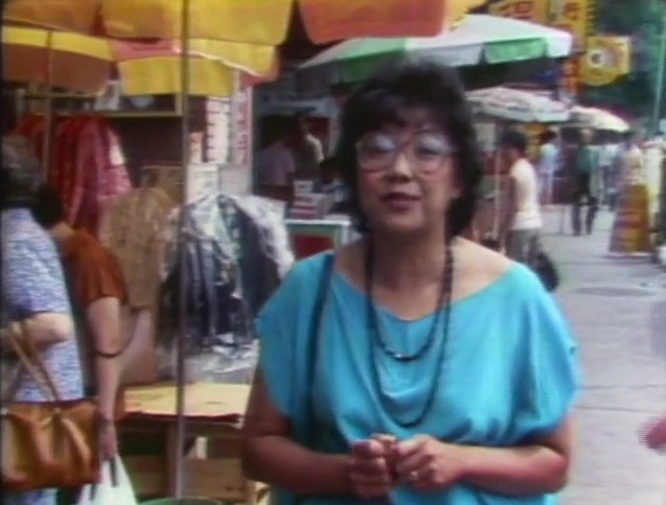
:: Chinatown (1984) [CBC]
AJ: Regarding the TV documentary you made, Chinatown [1984], the one you made with community organizer Valerie Mah. Was it commissioned by the CBC?
KL: Yeah, it was for a CBC series called Neighbourhoods, where they presented the different neighbourhoods in Toronto. So I applied, and it had to be the neighbourhood you live in. I lived in Greektown, so I was going to do Greektown… But then they realized that maybe I should do Chinatown. [Laughs]
Before I made that film, I watched all the Chinatown films I could find. Oh man, they were so ugly. It was just horrible. So I got Valerie, who was a family friend, and the producers were like, “Where did you find her?” But there was one problem: in the final scene, the one with the carp still alive in the dish after being fried (I must say here that it was the cook who insisted we shoot this dish because it took a lot of skill). So, the producers called me into the studio after it screened on TV, and they showed me this thing that this guy had sent out, asking, “Do you know what's happening in Chinatown?” He was trying to mobilize people about this dish. The producers were really upset and frightened that something might happen. So they told me I had to go down to the restaurant and warn them.
I went down there, and I told them about this. The guy said he already knew about this perception and that they lawyered up, maintaining they did nothing wrong. That was it, they weren’t afraid. I was afraid they’d blame me for bringing this onto them, but they were from Hong Kong, from the new generation, so they were more sophisticated and knew about lawyers and stuff. They knew they were not breaking the law. I was just really relieved.
That being said, when we showed it to the community, Jean Lumb, the great activist and restaurateur, was there too, and people were really upset that I got to show this dish, because they thought it reflected badly on the community. We all knew each other very well, so Jean came over to me and asked, “Keith, have your parents seen it?” I go, “Yes, they have.” “What did they think?” “Oh, they didn't have any problem with it.” Then Jean Lumb went and talked to the community and said there was no problem with it… A lot of people had never seen that dish. I had never seen that dish. Of course, it’s made to catch attention, and that's what the cook was going for, so I just let him do it. And the fish is dead at this point. It's scaled, it's gutted. It's just the nerves that are making it do that.
AJ: It's impressive how Jean Lumb was central to the community.
KL: Certainly. I mostly called her Mrs. Lumb. When I was a kid, my parents were always talking about her and used to yell at me if I didn’t call her Mrs. Lumb.
AJ: It’s beautiful how things are connected. For this project, we also partner with the Festival Accès Asie, which was co-founded in 1995 by Janet Lumb, the daughter of Jean. She’s also a musician.
KL: Oh, yes, she was in a band called The Asia Minors, with a couple of her siblings. The band was backed by the Lumb family. The Japanese-Canadian writer, Terry Watada, was also in there with them at some point.
AJ: I wanted to ask you about your contribution to the Long Time No See Collective in Toronto, which honours the first Chinese to arrive in Toronto. How did you become involved in it?
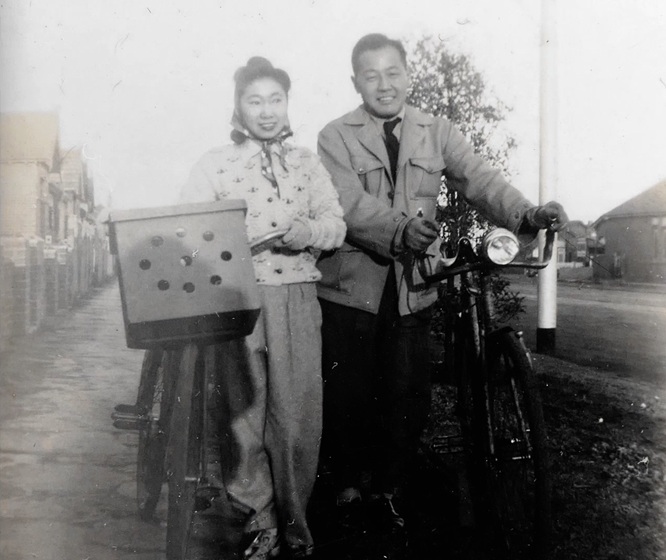
:: Les parents de Keith, extrait de Relics of Love and War (2023) [Keith Lock]
KL: I know Rick Wong and Brenda Joy Lem, who are also in the collective. Rick’s father was also in Operation Oblivion, like my father; we see them in Relics of Love and War [2023]. It’s a weird connection!
In the 1980s, Brenda was making a film, and she invited me into the editing room to see it. After lunch, she introduced me to her partner, Rick, and we started talking and soon realized that both our mothers were Chinese Australian. It turned out they all knew each other, and both our mothers came to Canada on the same boat.
It was very interesting because during COVID, there was a lot of anti-Chinese sentiment and that was when the collective started. We had these big posters and put them up outside, like on a wall. It's interesting because it's a gallery in the open air, so you don't have to go, buy a ticket, or take time off from your day. People just saw it, so many more people could see the work, certainly more than if they were in a gallery. It was very interesting to be like, “If you want to do something, you do it. You express, and you put it up there.”
And we got permission from the stores and said we would take them down after a certain time, which we did. That was sort of very natural for me. I also met Sandy Yep there [the activist and community builder whose work is behind the Yep-Riopel House in Montréal, where the JIA Foundation is located].
Later, we did a show at an art gallery in Markham. Markham is 40% Chinese. Some people went there four or five times to see it. It was the first time they had seen themselves in such a space. I love doing that kind of work; it keeps me involved.
In Markham, we also worked with Indigenous people who performed a dance during the event. In that regard, there always was a connection between our two communities that goes back to the railroads. I worked with Kenneth Williams, a Cree playwright, on Café Daughter [2023], the play and its adaptation, about a half-Chinese, half-indigenous woman, a Chindian. She became one of the top neurobiologists in Canada, then a senator. She was living on William’s reserve in Treaty 4 territory, in Saskatchewan. He wrote it, but I helped him do a lot of research. I learned there was this whole demographic of half-Chinese, half-indigenous people, and nobody really talks about it because they can blend in both communities. I was supposed to direct the film adaptation at first, but I thought it should be an indigenous woman. So I got Shelley Niro involved, and then they made me executive producer. It was really interesting. All the crew and cast were Asian and Indigenous. It was just a really nice vibe. They gave me a cameo role. First time in front of the camera. I was “Chinese #2 or #3” [laughs]. It won the Audience Award at imagiNATIVE, and it’s now on CBC Gem.
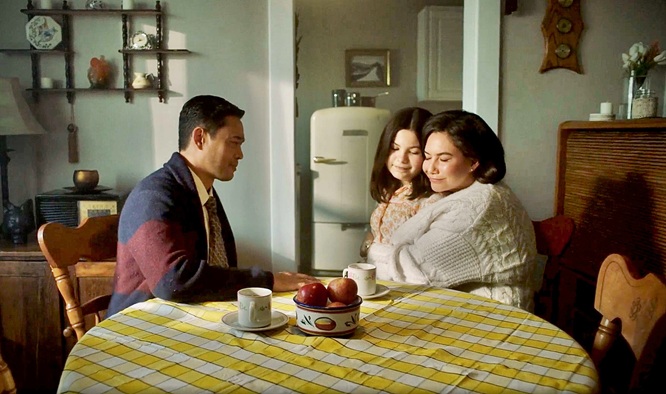
:: Café Daughter (Shelley Niro, 2023) [Freddie Films / Circle Blue Entertainment]
MLG: Did people already take you for an Indigenous person?
KL: I used to have long hair. So people used to think that maybe... One time, I was hitchhiking up to Buck Lake and sitting at the highway, and this native guy came over and said, “Are you native? Are you Indian?”
I said, “No, I'm Chinese.”
And he said, “A lot of people think I'm Chinese, and I let them because my life is so much easier when I do.”
I didn't understand fully at the time. Eventually, I learned how difficult things were for them, much more difficult than for us, even though we had it tough.
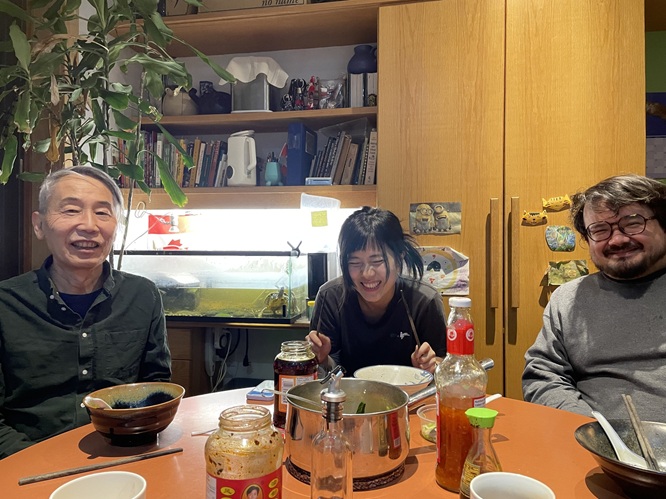
:: After the noodles, after the interview (Photo: © Leslie Padorr)
*
Audrey Jiang is an independent curator and food artist, she is part of Miao Collective, a border-crossing film screening collective focusing on Asian documentaries, bringing diaspora film gatherings to Netherlands, China and Canada. At her screening, you can always see the traces of food, sometimes a warm bowl of soup, other times sweet and sour eggplants. She also worked with Montréal’s Chinatown on storytelling and placemaking.
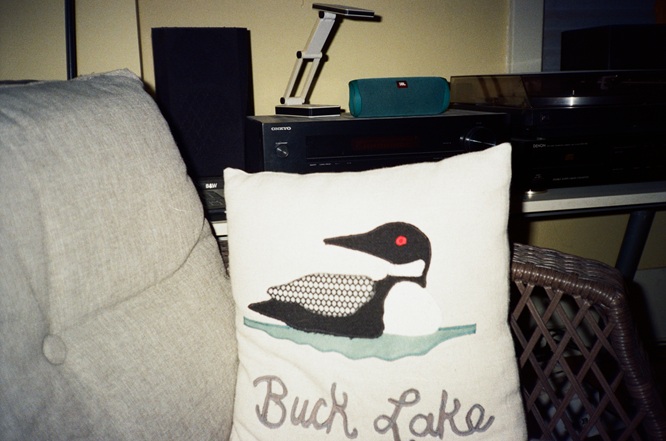
:: At Keith Lock and Leslie Padorr's home, on April 15, 2026. (Photo: © Audrey Jiang)
 |
envoyer par courriel | 
| imprimer | Tweet |





Site créé sur mesure pour Panorama-Cinéma par  .
.