|
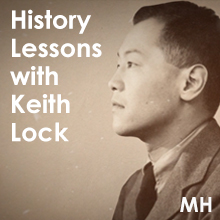
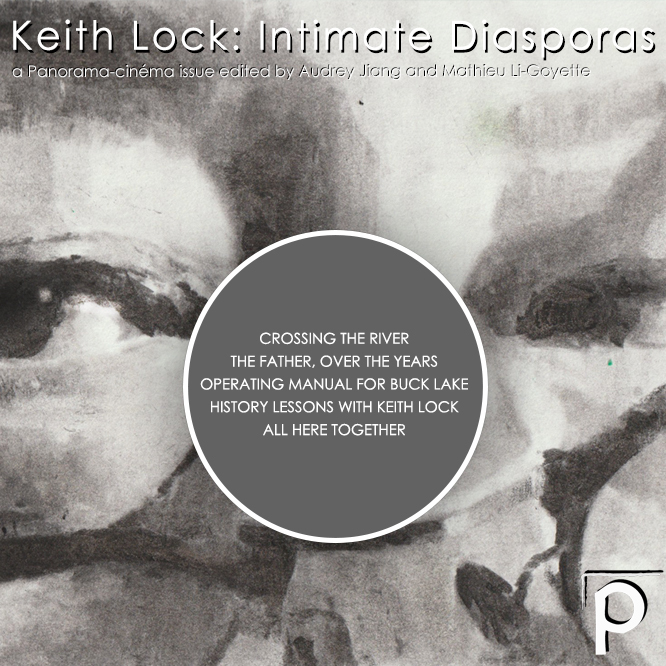
RELICS OF LOVE AND WAR Two years ago, Mike Hoolboom shared Keith Lock’s story with us in an interview finally published here. In it, we discovered the incredible journey of the first Chinese Canadian to have directed a film in Canada, the son of a Second World War commando, assistant to Michael Snow and Claude Jutra, director of experimental films, fiction, documentaries and even animated films… Nevertheless, no one in Québec who was asked about Keith Lock had ever heard of him. Yet his filmography comprises some twenty films with a clear vision, featuring diverse styles that remain agile, as they are constantly engaged in questioning their own fabrication and perception. Fascinated by the NFB’s films and a reader of Marshall McLuhan, the man who grew up in Toronto’s historic Chinatown quickly turned his camera on the hippies before turning his attention to the representation of his community as a third-generation immigrant. When his grandmother arrived in Toronto in 1909, Chinese women were so rare there that the Toronto Star ran the headline “Chinese Woman comes to Toronto”. This placed Lock in a privileged position to bear witness to the trials endured by the Chinese diaspora in Canada since its arrival in the country in the late 19th century, whilst remaining attuned to the utopias of the 1970s, steeped in cooperativism, the back-to-the-land movement and ontological quests. Unsurprisingly, his cinema “comes from the heart”, he would tell us when we met him at his home in East York in 2026. Short films, medium-length films, feature-length films, in every genre and style imaginable from coast to coast, Lock’s cinema is imbued with a unique sensibility that can initially be summed up as a mythological quest, in which he theorises the narration of multiple gestures that he magnifies in Flights of Frenzy (1969), Touched (1970), Arnold (1971), Work Bike and Eat (1972), and finally in Everything Everywhere Again Alive (1975), his masterpiece on life in the wilderness at Buck Lake. Subsequently, after returning to study for a master’s degree in film and a stint on the sets of tax-shelter exploitation films, Lock succeeded in refining a community-oriented voice, driven by a desire to convey decency and cultural complexity, whilst observing the successive waves of Chinese immigration and their intrinsic nuances. This is what he demonstrates in Chinatown (1984), A Brighter Moon (1986) and Tough Bananas (1997). In a way, his fantasy tale, the rarely seen The Ache (2009), is a cross between these two tendencies. The mythological quest becomes personal and intimate, rooted in a minority history that has long been sidelined by the federal government, beginning with the Chinese Immigration Act and the Electoral Franchise Act of 1885. At that time, John A. Macdonald’s government stripped people of Chinese origin of their right to vote, excluding them from democratic life for fear that their numbers—which had swelled following the construction of the railway between 1881 and 1885—might give them any political clout. From 1923 to 1947, what became known as the Chinese Exclusion Act effectively banned almost all forms of Chinese immigration for 24 years. The separation of families and the isolation of the communities here contributed to the emergence of ‘typical’ phenomena in the Canadian context, such as the precarious situation of bachelors whose families had remained in China and who lived alone in Canada. It is within this community landscape that Keith Lock grew up, and it is to this landscape that he dedicates a cinema that becomes a cultural and family investigation, delving into his own roots alongside those of anti-Asian racism, chronicling a story of integration that is a far cry from the narratives that a more conventional, formulaic Canadian cinema usually derives from these sensitive experiences. In a joint article, Stephen Broomer, the historian and critic behind the Black Zero label, and the experimental filmmaker and essayist Clint Enns, have written an instruction manual for engaging with the glyphs, dots and corners that cover the images in Everything Everywhere Again Alive. Wen Kong, filmmaker and researcher, offers an essay on the omnipresent figure of the father in Keith Lock’s work, first as an actor in his early fiction films, then as a subject in his later films, right up to Relics of Love and War (2023). The Sino-Toronto artist brenda joy lem shares with us her memories of meeting Keith Lock in the 1980s, as well as their experience working together during COVID as part of Long Time No See Collective, an artistic response to reunite a dismembered community. The writer and filmmaker Dédé Chen writes on Flights of Frenzy and the cultural tension between identity and form. We also present a two-part, in-depth interview with Keith Lock, as well as an oral essay by Mike Hoolboom on the reception of Relics of Love and War at a cineclub screening in Toronto. Finally, a critical section by the magazine’s editorial team [in French only] offers a staunchly cinephile approach, aiming to place Keith Lock’s cinema within an Anglophone-Canadian canon that remains largely unexplored by Québec critics. In this respect, doing justice to his cinema means engaging with his assertive humanism with the same openness that characterises his mise-en-scène. His career is a model of creativity and makes him one of the most overlooked filmmakers in the history of Canadian cinema. This online issue and the accompanying retrospective at the Cinémathèque québécoise, the JIA Foundation and La Métropolitaine are intended as a way of highlighting his work and bringing it across the border. Step by step, each one coming from the heart, the four corners of a space of freedom take shape.
Audrey Jiang and Mathieu Li-Goyette
*
Audrey Jiang is an independent curator and food artist, she is part of Miao Collective, a border-crossing film screening collective focusing on Asian documentaries, bringing diaspora film gatherings to Netherlands, China and Canada. At her screening, you can always see the traces of food, sometimes a warm bowl of soup, other times sweet and sour eggplants. She also worked with Montréal’s Chinatown on storytelling and placemaking.
Illustration: Bryan Beyung |
|
 |
envoyer par courriel | 
| imprimer | Tweet |





Site créé sur mesure pour Panorama-Cinéma par  .
.